Starting a new website project involves much more than choosing colours, images, and layouts. For businesses in Burnley and elsewhere, a website needs to communicate clearly, support customers, reflect the brand, and provide a reliable platform for future growth. Achieving these goals requires careful decisions before visual work even begins.
Experienced web designers approach each project as a structured business process. They take time to understand the organisation, its audience, priorities, and future plans before deciding how individual pages should look or function. This preparation reduces unnecessary revisions and helps ensure that every element has a clear purpose.
For homeware brands, health and wellness businesses, and retailers, this structured approach is particularly valuable. These businesses may need to present detailed product ranges, establish customer confidence, support enquiries, or accommodate changing services. A website therefore needs to work effectively today while remaining flexible enough for tomorrow.
This article explores five important stages professionals consider when approaching a new website project, from initial discovery and planning through to development, testing, and future scalability.
Understanding the Business Before Designing
A successful project begins with understanding the business rather than immediately creating layouts. Before making design decisions, professionals need to establish what the organisation does, who it serves, and what the website is expected to achieve.
A homeware company may want visitors to explore collections and understand the quality behind its products. A wellness business may prioritise trust, clear service information, and straightforward enquiries. Retail companies may need to balance product discovery with promotions, customer support, and purchasing journeys.
Business objectives should therefore guide the project. Important questions may include whether the priority is generating enquiries, selling products, increasing bookings, providing information, or strengthening brand credibility. A website can support several goals, but establishing their order of importance helps create a clearer user journey.
Audience research is equally important. Different customers have different expectations, levels of knowledge, and reasons for visiting. Understanding these factors helps determine the language, content depth, navigation, and calls to action that will be most appropriate.
Professionals also review existing brand materials and digital assets. This can reveal inconsistencies, outdated information, missing content, or opportunities to improve how the organisation communicates online. For an established Burnley business, the new website should build upon existing brand recognition rather than unnecessarily starting again.
Competitor research can provide useful context without encouraging imitation. Looking at how other businesses communicate their services can reveal common expectations, gaps in the market, and opportunities to present information more clearly.
Good website design therefore starts with understanding the business problem the website needs to solve. Visual decisions become more meaningful when they are supported by clear commercial objectives and genuine knowledge of the audience.
Planning Structure, Content, and User Journeys
Once objectives are established, attention turns to the structure of the website. This stage determines how information will be organised and how visitors will move between important pages.
Professionals typically consider:
- Page hierarchy: Core pages are identified and organised according to their importance, helping users understand where information belongs.
- Navigation: Menus are kept clear and logical so visitors can reach products, services, company information, and contact options without unnecessary searching.
- User journeys: Different routes through the website are considered according to visitor intent. Someone researching a service may follow a different journey from a customer ready to make an enquiry.
- Content requirements: Existing copy, photographs, product details, and other assets are reviewed to identify what can be retained, improved, replaced, or created.
- Calls to action: Enquiry buttons, booking options, product links, and other prompts are positioned around natural decision points rather than added randomly.
- Mobile structure: Navigation and content hierarchy are considered for smaller screens from an early stage rather than being adjusted only after desktop layouts are complete.
- Future expansion: Space is considered for potential new services, products, resources, or locations so that growth does not make the structure difficult to manage.
For a retail business, this planning might involve organising product categories so customers can browse naturally. A health and wellness provider may instead require clearly separated services with simple routes towards booking or contact information.
Businesses sometimes search for a website designer near me expecting the process to begin with visual concepts. However, experienced professionals generally recognise that page structure and user journeys should be resolved first. Attractive layouts cannot compensate for confusing navigation or poorly organised information.
Careful planning also prevents pages from being created simply because competitors have them. Every section should have a reason to exist and contribute either to the user experience, business objectives, or both.

Turning the Strategy Into a Functional Experience
With the structure established, the project can move into the visual and functional stages. At this point, decisions about layout, typography, imagery, spacing, and interactive elements are informed by the strategy developed earlier.
Consistency is particularly important. Buttons, headings, navigation elements, forms, and other components should behave predictably throughout the site. Familiar patterns reduce the amount of effort required from visitors and help the business appear organised and professional.
Visual hierarchy guides attention towards important information. Headings distinguish key messages, spacing separates related sections, and carefully positioned calls to action show visitors where they can proceed next. Good layouts make detailed information easier to absorb without stripping away useful context.
Brand identity should also influence visual decisions without overwhelming usability. Colours, typography, imagery, and graphical elements can communicate personality, but they need to remain appropriate for the audience. A wellness company may favour a calm and uncluttered experience, while a homeware brand may place greater emphasis on high-quality product imagery and visual inspiration.
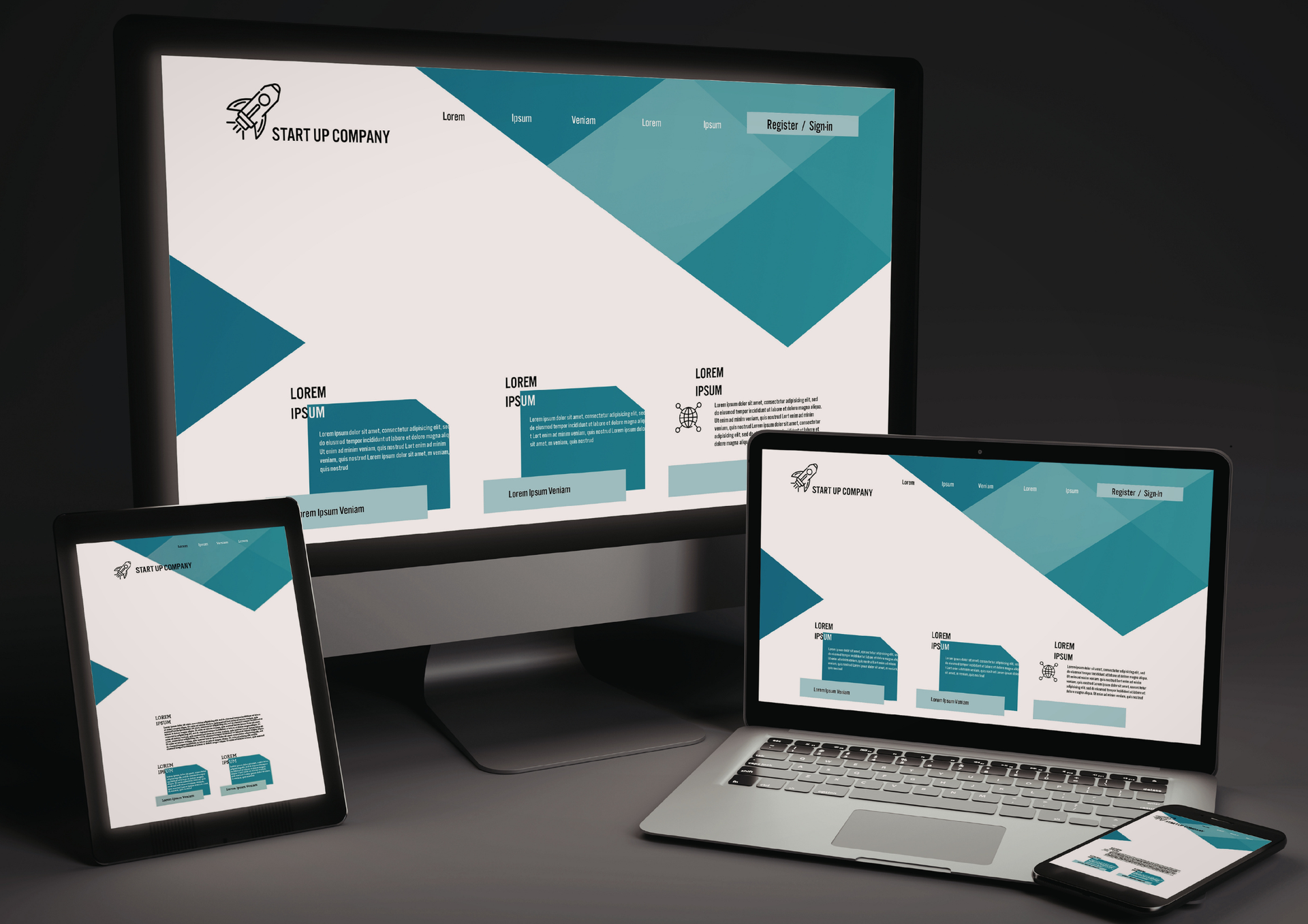
Responsive behaviour is planned alongside these decisions. Content must adapt effectively to desktops, tablets, and smartphones. Navigation may change format, columns may stack, and images may resize, but the underlying hierarchy should remain understandable.
The technical build then transforms approved layouts into a functioning platform. Professional website development focuses on reliability, responsiveness, efficient structure, and maintainability. Features should serve genuine business requirements rather than being included simply because they are technically possible.
This stage also involves considering content management. Businesses should be able to handle appropriate routine changes without unnecessarily disrupting layouts or functionality. Clear templates and structured content fields can make future updates more manageable.
Experienced web designers maintain close alignment between visual decisions and technical implementation throughout this process. This helps ensure the finished platform reflects the original objectives rather than becoming disconnected as the project moves from planning into production.
Testing Before the Website Goes Live
A website should not be considered complete simply because all planned pages have been built. Testing is an essential stage that identifies problems before they affect customers.
A structured review commonly includes:
- Navigation testing: Menus, internal links, buttons, and calls to action are checked to ensure they lead to the intended destinations.
- Responsive testing: Pages are reviewed across different screen sizes to confirm that content remains readable and interactive elements remain accessible.
- Form testing: Contact forms, booking forms, newsletter fields, and other submission features are checked from start to finish.
- Content review: Headings, text, images, product details, contact information, and other important content are checked for accuracy and consistency.
- Performance checks: Large media files, unnecessary scripts, and other elements that could slow down pages are identified and addressed where appropriate.
- Browser testing: Key pages and functions are checked across commonly used browsers to reduce inconsistencies.
- User journey review: Important routes, such as moving from a service page to an enquiry or from a product category to a purchase decision, are tested as complete experiences.
- Accessibility considerations: Readability, navigation clarity, descriptive content, and interaction patterns are reviewed to make the experience more inclusive.
Testing also provides an opportunity to reconsider earlier assumptions. A button that appeared obvious during planning may be less noticeable in the completed page, or a navigation label may prove unclear when viewed alongside other options. Adjustments at this stage can prevent small usability issues from becoming ongoing problems.
There are many tools promoted as the best website builders, and they can be useful in certain situations, but the platform itself does not replace a thorough quality-assurance process. Reliable results depend on careful planning, implementation, and testing regardless of which technology is used.
A controlled launch process is equally valuable. Backups, redirects where necessary, analytics configuration, and final technical checks should be completed before the website becomes the primary live version.
Planning Beyond the Initial Launch
Launching a website is an important milestone, but it should not represent the end of strategic thinking. Businesses change, customer expectations develop, and digital requirements evolve. A site should therefore be prepared for ongoing improvement.
Scalability is one of the first considerations. If a Burnley retailer expands its product range, the website should accommodate new categories without creating confusing navigation. If a wellness company introduces additional services or locations, these should be incorporated without rebuilding the entire platform.
Content requirements also change over time. Service information may need updating, new case studies may become available, or frequently asked questions may emerge from customer enquiries. A flexible structure makes these updates easier to introduce while preserving consistency.
Performance should also be reviewed periodically. Adding images, integrations, plugins, tracking systems, or new functionality can gradually affect loading times and reliability. Routine checks help identify issues before they significantly influence users.
Visitor behaviour can provide further insight. Businesses can assess which pages receive attention, where enquiries originate, and whether visitors encounter obstacles along important journeys. These findings can guide practical improvements based on evidence rather than assumptions.
The strongest websites are therefore not treated as fixed products. They provide a stable foundation that can be refined as the organisation learns more about its customers and develops new priorities.
Experienced
web designers
consider this future from the beginning. By planning for flexibility, maintainability, and growth, they help businesses avoid unnecessary rebuilding and gain greater long-term value from their digital investment.
Approaching a new website professionally requires much more than producing an attractive set of pages. The process begins with understanding business objectives and audiences, followed by careful structural planning, purposeful design, reliable implementation, thorough testing, and preparation for future growth.
For homeware brands, health and wellness businesses, retailers, and other growing organisations, this method provides a stronger foundation for long-term digital performance. It ensures that decisions are based on genuine requirements rather than temporary trends or assumptions.
A well-planned project should ultimately make the website easier for customers to use and easier for the business to manage. By considering both immediate objectives and future needs, organisations can create digital platforms that remain relevant as they grow
ETA Web Design Burnley takes a structured, business-focused approach to new website projects. We begin by understanding your goals, customers, content requirements, and future plans so that each decision has a clear purpose.
Our experienced web designers prioritise usability, professional presentation, responsive performance, and scalability. Whether you operate a homeware brand, wellness business, retail company, or another growing organisation, we aim to create a practical digital platform that supports both customers and wider business objectives.
By combining careful planning with clear communication and long-term thinking, ETA Web Design Burnley helps businesses create websites that are manageable, adaptable, and prepared to support continued growth.
Check out our latest X update on how experienced
web designers approach a new website project from initial planning through to design and development.